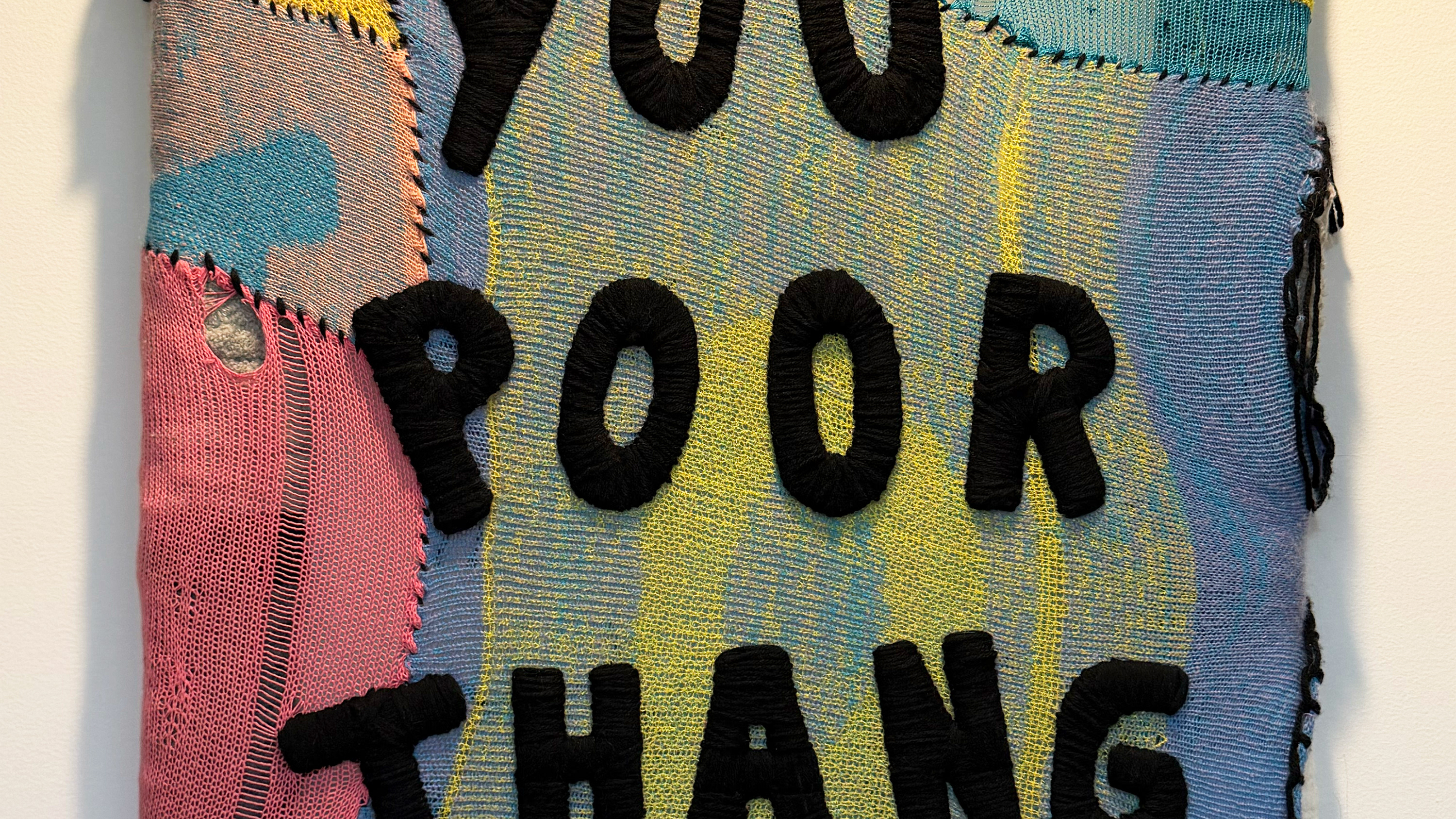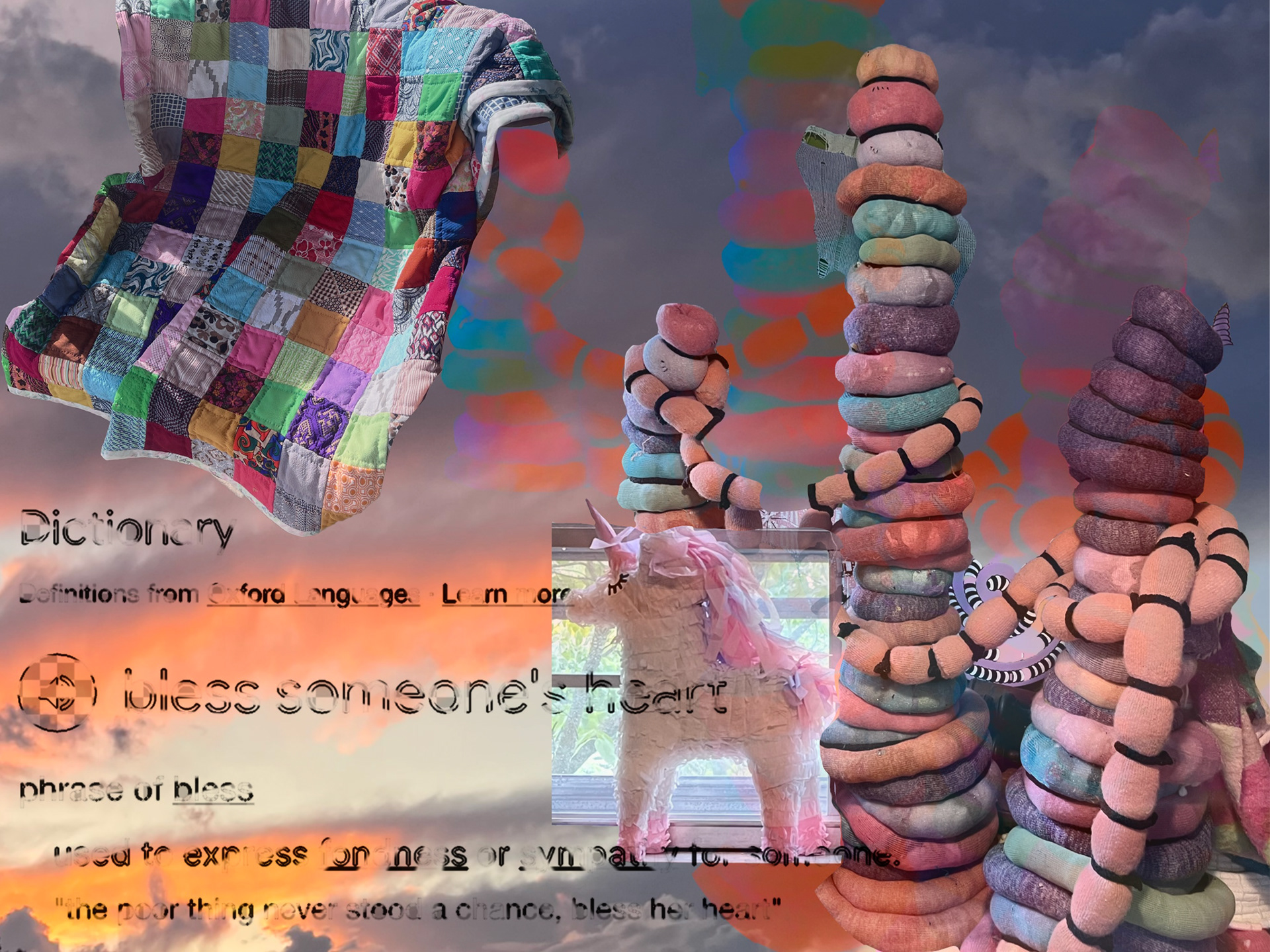
“Bless Ur Heart,” came about when I moved back to my hometown Knoxville, Tennessee this past summer. After a stint of inspiration being much harder to come by than usual, being surrounded by the landscape, weather, and people that I love so dearly sparked new ideas instantly. I became particularly interested in the way southerners often talk. Certain phrases and ways of speaking can hold mixed messages that are found in places with that beloved “southern charm.” For example, I’ve noticed the words “bless your heart” being used and perceived either as a sweet expression of sympathy, or a condescending and judgmental response to one’s problems or shortcomings. This phrase is particularly relevant to me because my mom says it quite often, but only when she genuinely feels bad for someone. I remember countless times as a kid when she said this while comforting me after I got hurt physically or emotionally. This energy is quite different than hearing “bless her heart” when gossiping about a young woman who ended up in psychiatric care, or “bless his heart” when hearing rumors about a boy everyone thought was bright ending up in rehab. Soon, the series became a discussion around how and where we meet people when they present their struggles with mental health.
Additionally, living in Knoxville again for the first time since graduating high school has also meant spending more time with my family. Growing up in Jackson, Tennessee, my mom always has the best stories. Her grandmother, Mamacille, was a talented quilter and seamstress. I have several quilts she made, and am in awe of the craftsmanship and attention to detail. I never got to meet her, but as one of my mom’s favorite people, I love that her and I share a hand for craft. For or as long as I’ve worked with textiles I’ve used recycled and dead-stock material as much as possible. Mamacille often made her quilts out of recycled material like her old pantsuits and scrap fabrics.
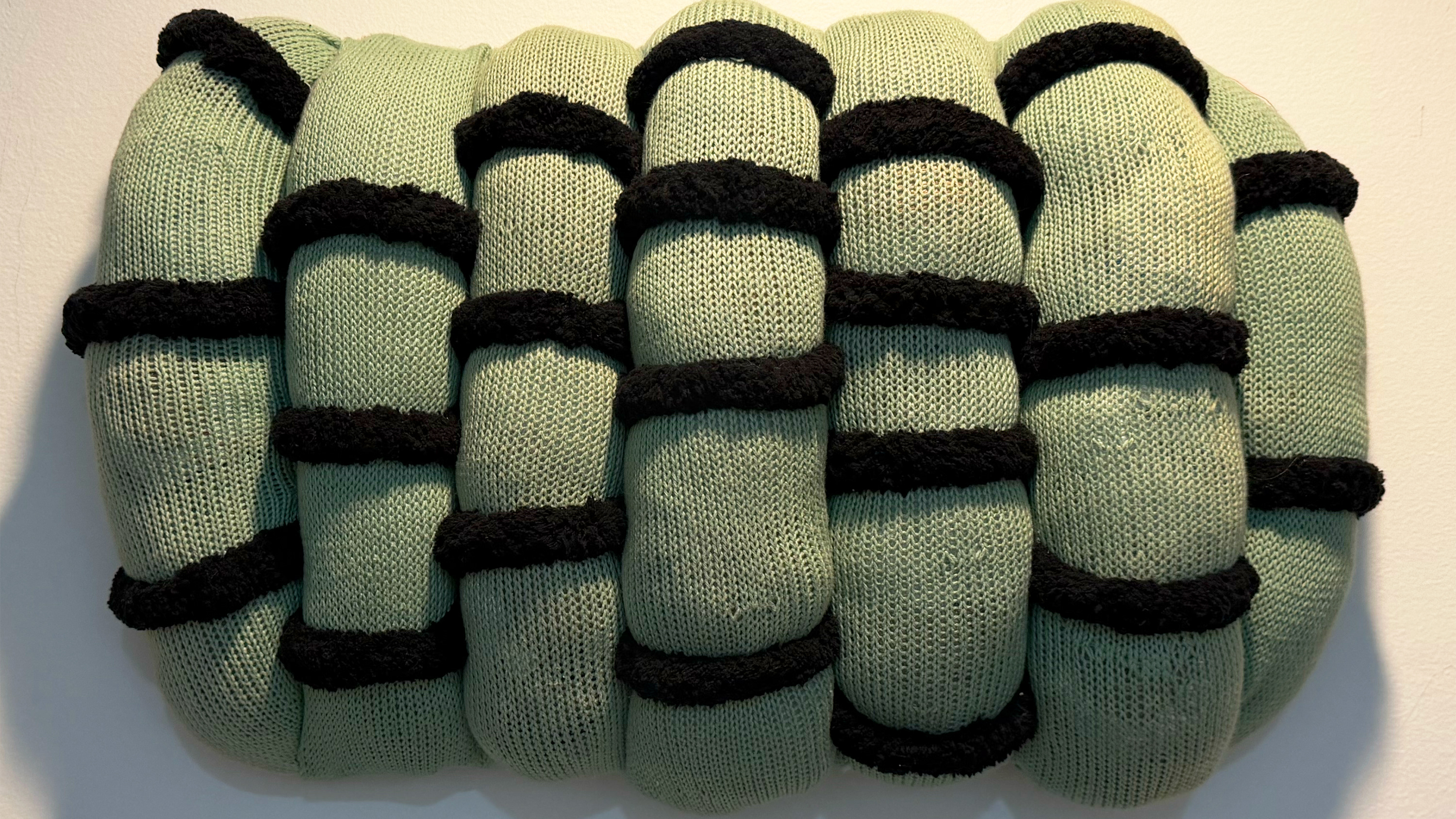
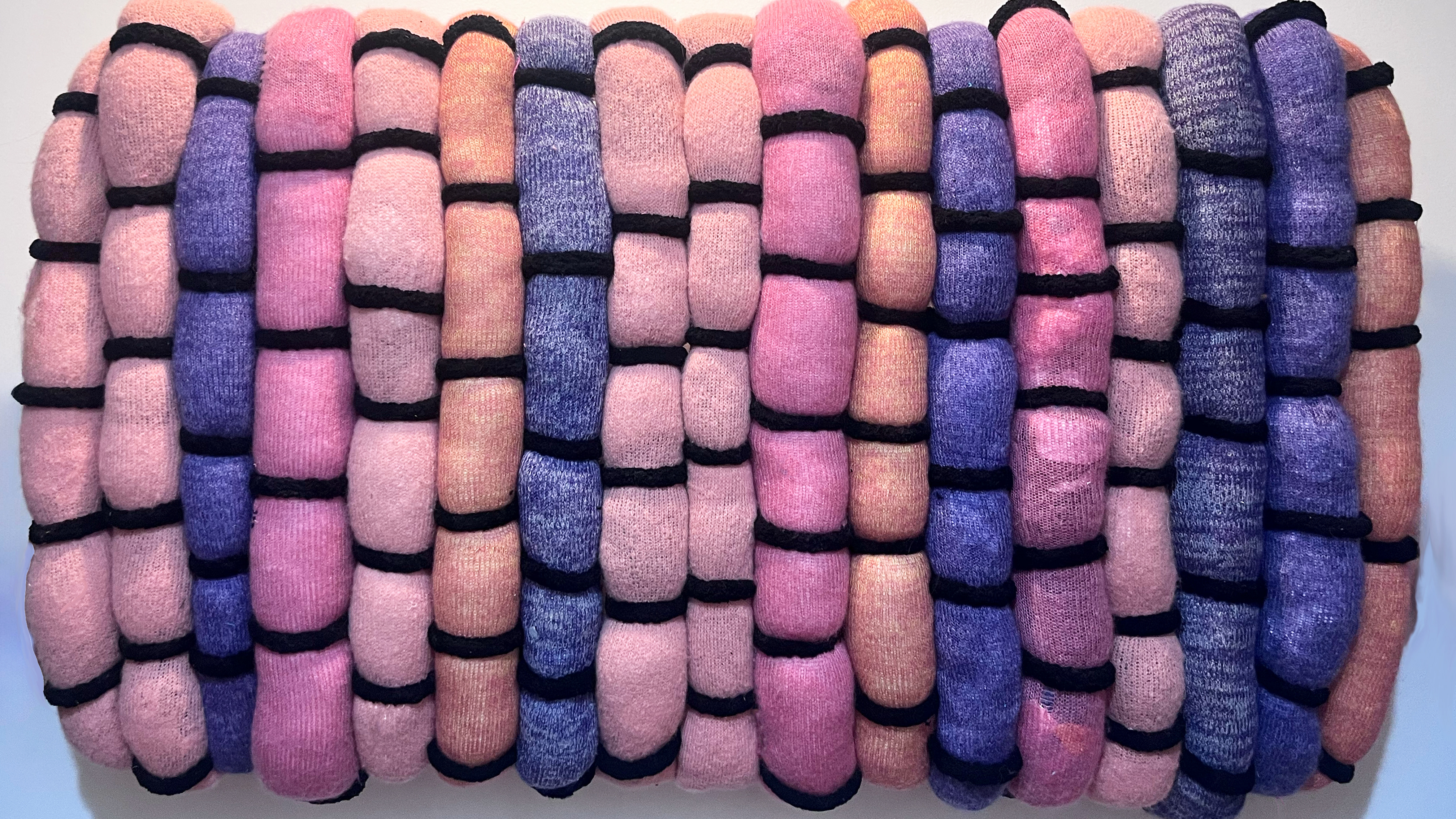
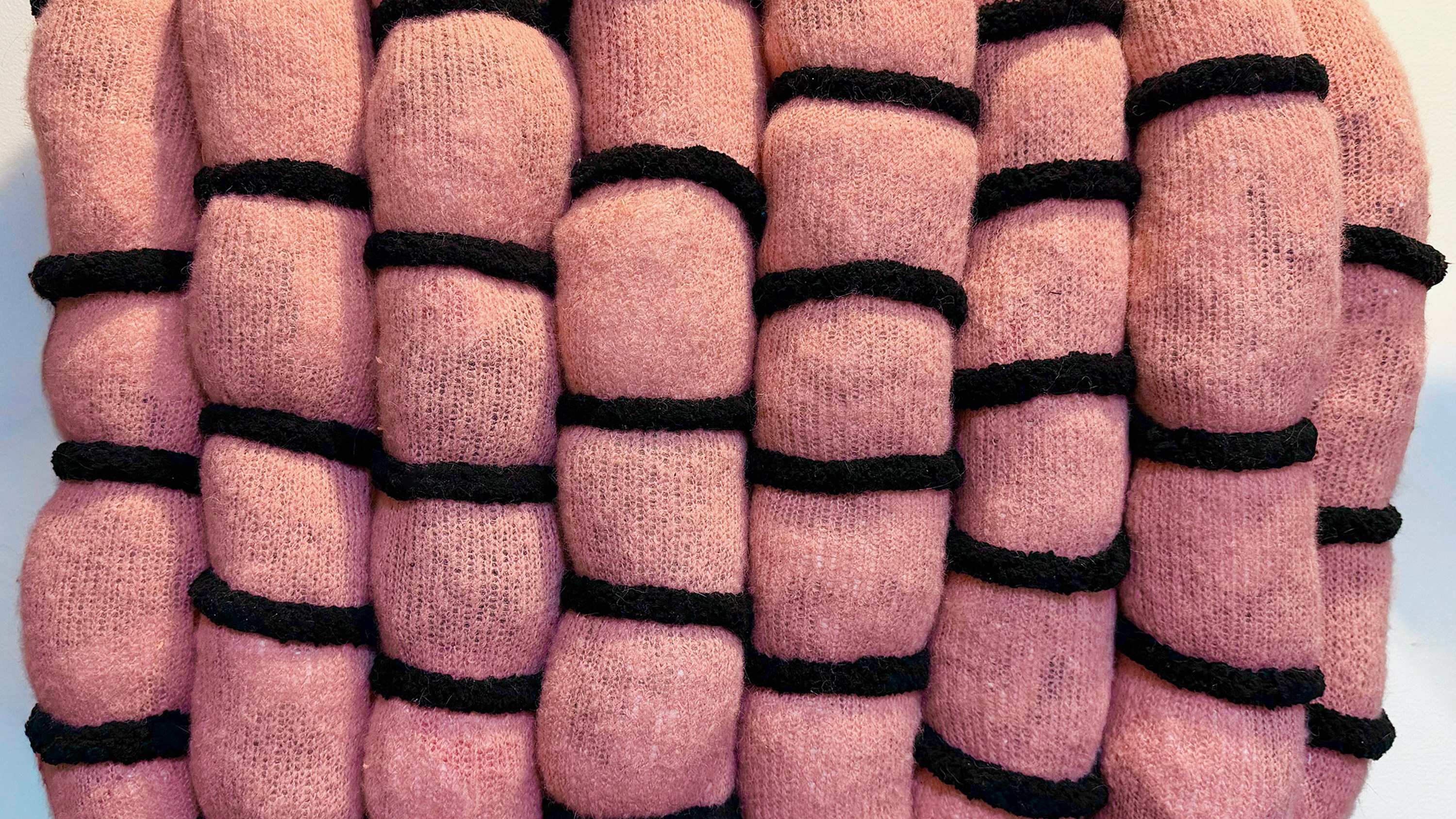
Materially, this series is made out of old work that’s run its course, scraps and samples I’ve saved from various projects, yarn I’ve had for years and haven’t found a use for, canvas frames with damaged paintings, and whatever else I could use while avoiding “fast” consumption as much as possible. By using recycled materials, I aim to reimagine waste into something meaningful, and consider the ways we are able to do that in our everyday lives too, literally and figuratively. Several pieces from the series look to organisms like worms and maggots, which often seen as repulsive, are simultaneously crucial for the environment as decomposers and recyclers of the earth’s soil. These machine knit tubes, stuffed with donated and found materials such as old clothes, yarn scraps, plastic grocery bags, deconstructed pillows, worn out stuffed animals, and ex-boyfriend’s old socks, are repurposed from my series “Thoroughly Transfigured Beings.”
While the process of working towards true mental health fosters growth and major positive change in one’s life, the stigma surrounding mental illness can make these conversations feel uncomfortable and unwelcome. As I’ve completed the series, I’ve considered the ways vulnerability in general can be terrifying, yet crucial to the way we connect as human beings. I would like viewers to consider their own discomfort surrounding vulnerability and where it may stem from, and I would like to offer an opportunity to come together, reflect on shared human experiences, and engage in conversations that promote healing and growth.